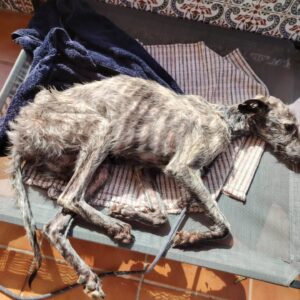
Commitment, care, and hope
Adopting a dog with leishmaniasis is not an act of pity, but of informed love and genuine commitment. Many of these dogs lead completely normal and happy lives if they receive proper care. However, it’s important that, as an adopter, you understand what this condition entails, especially in terms of veterinary care and finances, to ensure a successful and responsible adoption.
What is leishmaniasis?
Leishmaniasis is a chronic parasitic disease that primarily affects the dog’s immune system. It is not directly transmitted between dogs , and with proper treatment and follow-up, many animals can live for years with a good quality of life.
What does this mean from a veterinary perspective?
Adopting a dog with leishmaniasis requires:
– Regular veterinary checkups , at least every 6 months, to perform blood tests and adjust treatment if necessary. – Monitoring of the dog’s overall health , especially kidney and liver function, as these organs can be affected by the disease. – Strict parasite control , especially against sand flies (the mosquito that transmits the disease). This includes special collars or spot-on treatments and avoiding walks at dawn and dusk during warm weather. – A balanced diet and, in some cases, special diets if there is kidney involvement.
What expenses are involved?
Costs may vary depending on the dog’s condition and the region, but generally speaking:
– Blood tests every 6-12 months : between €40 and €100 per test. – Daily treatment with allopurinol (maintenance medication): approximately €10 to €20 per month. – During active phases or flare-ups , more intensive treatment with injections (miltefosine, glucantime, or other medications) may be necessary, representing an additional cost that can range from €150 to €300 per treatment . – Specific repellent collars or spot-on treatments : approximately €30 to €50 every 2-3 months.
It is essential to keep in mind that leishmaniasis is not curable, but it can be controlled. Many dogs live for years without symptoms if they receive proper care.
Adopt with awareness
At our association, we seek homes where the commitment is genuine. Adopting a dog with leishmaniasis isn’t for everyone, and it’s perfectly fine if you decide you can’t take it on. The important thing is to be honest with yourself and with the animal’s well-being.
If you decide to take this step, you’ll be bringing home a dog who has likely suffered a great deal, but who also has an enormous capacity for gratitude and love. With your help, he can have the dignified life he deserves.